Hiring a skip seems simple until you're faced with a list of sizes in cubic metres and no real idea what a "4 m³ skip" looks like next to your pile of old carpet and broken furniture. Get it wrong one way and you're paying for space you didn't need; get it wrong the other way and you're left with a pile of rubbish beside a full bin, or a skip that's too heavy to lift. This guide explains how skip sizes work and how to choose.
m³
How skips are sized
Volume when filled level with the top
Level fill
The usual rule
Overfilled skips may not be collected
Weight
The hidden limit
Soil, bricks and concrete fill weight before volume
What a cubic metre looks like
A cubic metre is a cube one metre long, one metre wide and one metre high. A skip's rating tells you how many of those cubes it holds when filled level with the top. So a 4 m³ skip holds the same volume as four such cubes, or a pile two metres long, two metres wide and one metre high.
It helps to picture it with familiar things. A standard 240-litre wheelie bin holds just under a quarter of a cubic metre, so a cubic metre is roughly four full wheelie bins. A larger skip of several cubic metres is the equivalent of dozens of wheelie bins, which is why skips are so useful for clean-outs and renovations.
Why the shape matters too
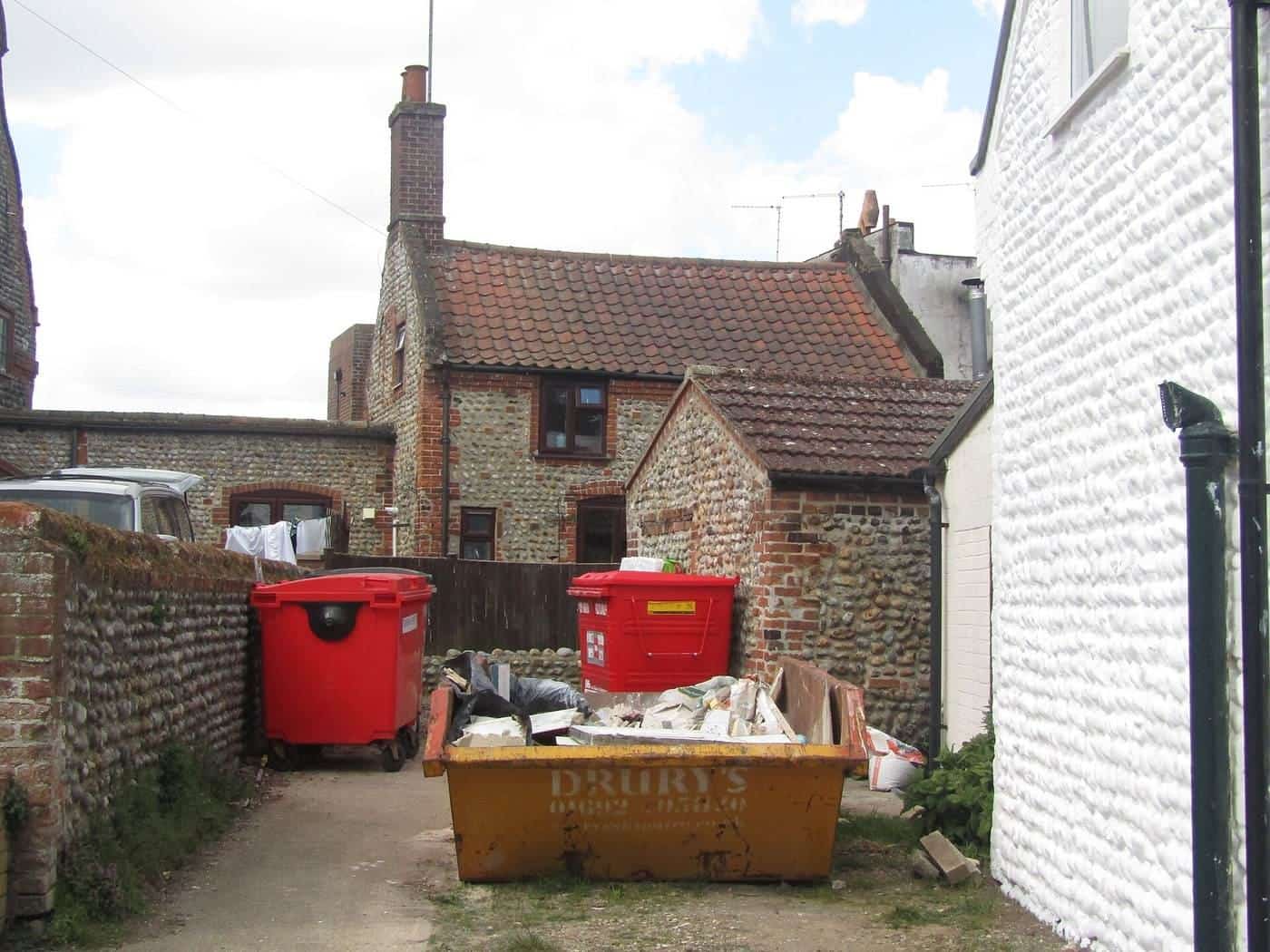
Two skips with the same cubic metre rating can be quite different shapes. A long, low bin is easier to throw waste into and fits more easily under carports and trees. A taller bin takes up less space on the ground but is harder to load over the side. Some skips have a drop-down door at one end so you can wheel a barrow straight in.
Always ask for the actual length, width and height of the skip, not just its volume. This matters for:
- Access. Will the delivery truck and bin fit down your driveway, under power lines and branches, and through any gate?
- Placement. Councils limit the size of skips on the street. City of Sydney's policy for minor residential works, for example, sets a maximum of 3.4 metres long and 1.7 metres wide for skips placed on the road without approval. Inner West Council's conditions set a maximum of 5 metres by 1.8 metres. See our permits guide.
- Loading. A high side wall is hard to lift heavy items over. Think about your back: Safe Work Australia notes that lifting, pushing and pulling can cause injuries, particularly with heavy, awkward loads and repeated lifting.
Matching size to the job
Providers offer different ranges, and every job is different, so treat this as a rough starting point and check with your provider.
| Job | Typical starting point | Notes |
|---|---|---|
| Garage or shed tidy-up | A small to mid-sized skip | Mostly light, bulky items |
| Garden clean-up | A mid-sized skip | Branches take lots of space; cut them down |
| Single-room renovation | A mid-sized skip | Tiles and mortar add weight quickly |
| Whole-house clean-out | A large skip, or more than one | Furniture and mattresses are bulky |
| Soil, bricks or concrete | A small heavy-waste skip | Weight, not volume, is the limit |
The best way to choose is to estimate your waste. Our estimating guide explains how, and the skip size estimator does the maths.
Weight limits: the hidden catch
Every skip and truck has a weight limit. For light, bulky waste like old furniture, cardboard and garden prunings, you'll fill the skip's volume long before you reach its weight limit. For heavy waste like soil, sand, bricks, concrete and tiles, the opposite is true: you can reach the weight limit with the skip only partly full.
That's why many providers offer special skips for heavy waste and set rules about how high they can be filled. If you go over the limit, the truck may not be able to lift the bin, or you may face extra charges under the provider's terms. Our guide to soil, concrete and heavy waste explains more.
The level-fill rule
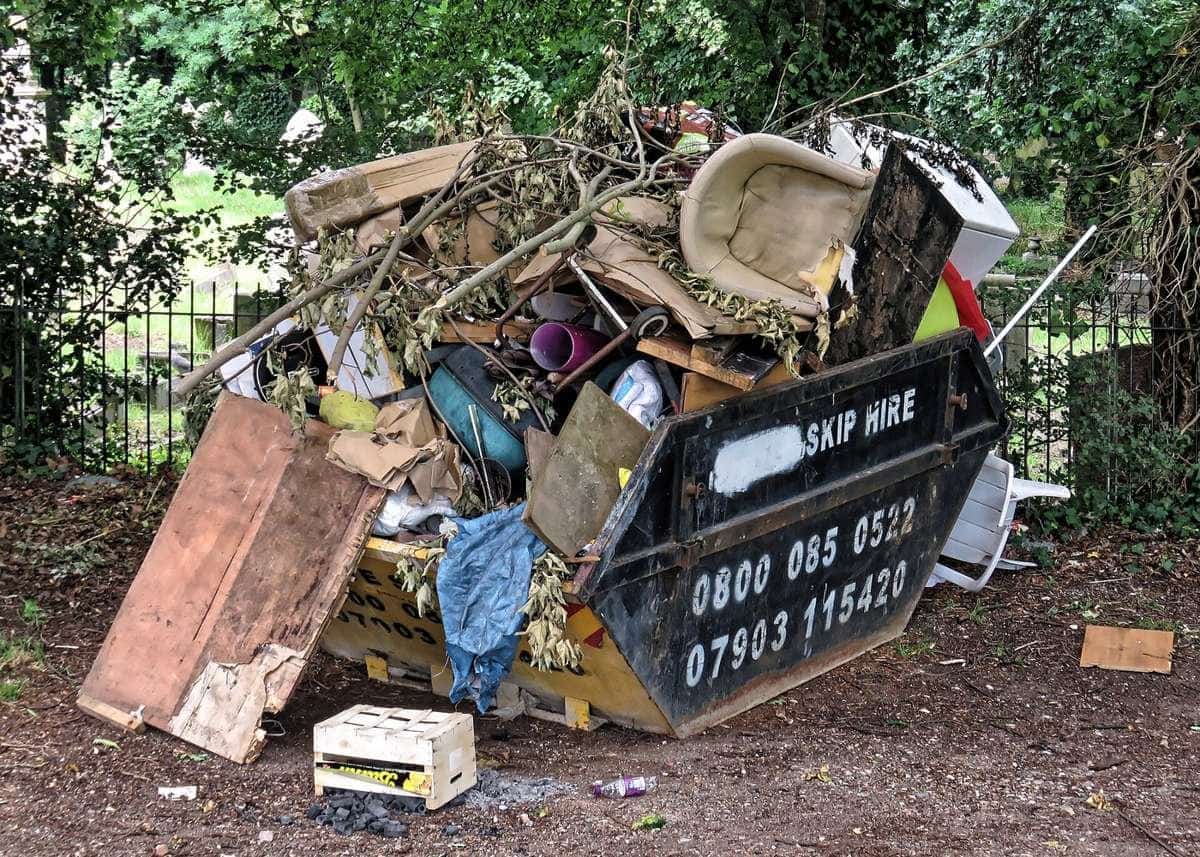
Most skip providers require waste to be no higher than the top edge of the bin. There are good reasons: an overfilled skip can shed waste onto the road during transport, and many trucks need a flat load to be covered or netted. If your skip is overfilled, the driver may refuse to collect it until it's levelled.
Plan for this when choosing a size. If your estimate is right on the limit of a particular skip, it's usually wise to go up a size, or plan to take some waste to a recycling centre or the tip yourself.
Avoiding the two classic mistakes
Too small. It's easy to underestimate how much space waste takes when it's thrown in loosely. Chairs, branches and boxes leave gaps. Our estimator adds an allowance for this. To get more in, break things down: take legs off tables, flatten boxes, cut branches into short lengths and put flat items in first.
Too heavy. If your job involves soil, rubble or concrete, tell the provider when you book. A general-waste skip filled with soil may be far too heavy to lift. Heavy waste usually goes in smaller, dedicated skips.
Questions to ask when booking
- What are the actual dimensions of the skip, including height?
- Is there a weight limit, and what happens if it's exceeded?
- Does it have a door for wheelbarrow access?
- What waste is accepted, and what's banned? See what you can put in a skip.
- How long is the hire period, and can it be extended?
- Can the skip go on my property, or will it need a council permit for the street?
- What access does the truck need?
When a skip isn't the right answer
For small amounts of waste, a skip may be overkill. Council kerbside clean-up collections, a trailer trip to the local tip or recycling centre, or a skip bag may suit better. For a large demolition or building job, a builder or demolition contractor will usually organise larger containers and waste tracking. And for asbestos or hazardous waste, a regular skip is not the answer: see our asbestos guide.
Hire periods
Skip hire usually includes a set number of days. If your project might run longer, ask about extension costs up front, and remember that council permits for skips on the road have their own time limits.
Key points
- Skip sizes are quoted in cubic metres, the volume when filled level with the top.
- Check actual dimensions for access, placement and ease of loading.
- Heavy waste reaches weight limits before volume limits; use a heavy-waste skip.
- Don't overfill: most providers require a level load.
- Estimate your waste first, and go up a size if you're on the borderline.
Frequently asked questions
How are skip bin sizes measured?
Usually in cubic metres (m³), the volume the bin holds when filled level with the top. One cubic metre is a cube one metre long, wide and high.
What size skip do I need for a bathroom renovation?
It depends on the size of the room and what's coming out. Measure or estimate your waste using our estimator, and remember tiles, mortar and concrete are heavy, so weight limits may matter more than volume.
Can I fill the skip above the top?
Generally no. Most providers require waste to be level with the top of the bin so it can be transported safely, and overfilled skips may not be collected.
Do all companies offer the same sizes?
No. Sizes, shapes and dimensions vary between providers. Check the actual length, width and height of the bin, not just its cubic metre rating.
Is it cheaper to get a bigger skip than two small ones?
Often a single larger skip works out better than a second hire, but we don't quote prices. Compare quotes for different sizes and ask about swap services.
Sources and further reading
Facts on this page were checked against these primary and official sources. Conditions change — confirm before you travel or buy.
- Managing Waste in Public Places – Local Approvals Policy (PDF) — City of Sydney
- Skip bins — Inner West Council
- Lifting, pushing and pulling (manual tasks) — Safe Work Australia