When you picture a skip, you probably see the classic yellow or green steel bin with sloping ends sitting in a driveway. That's one type, but there are others, each delivered by a different kind of truck and suited to different jobs. Choosing the right type can make loading easier, help the bin fit where you need it and keep you on the right side of council rules. Names vary a little between companies and states, but the main types are described below.
Marrel
The classic tapered skip
Lifted by chains on the truck's arms
Hook-lift
Large roll-on roll-off bins
Pulled up onto the truck tray
Walk-in
A door at one end
Wheel a barrow straight in
Mini skips
Mini skips are the smallest bins, designed for small clean-ups: a garage tidy, a small garden job or clearing out a single room. Because they're compact, they fit in tight spots such as narrow driveways, courtyards and townhouse frontages. They're also easier to load because the sides are low.
Mini skips are often a good choice for heavy waste such as soil, bricks and concrete, because a small volume of heavy material can still reach a significant weight. Check the provider's weight limit.
Marrel skips
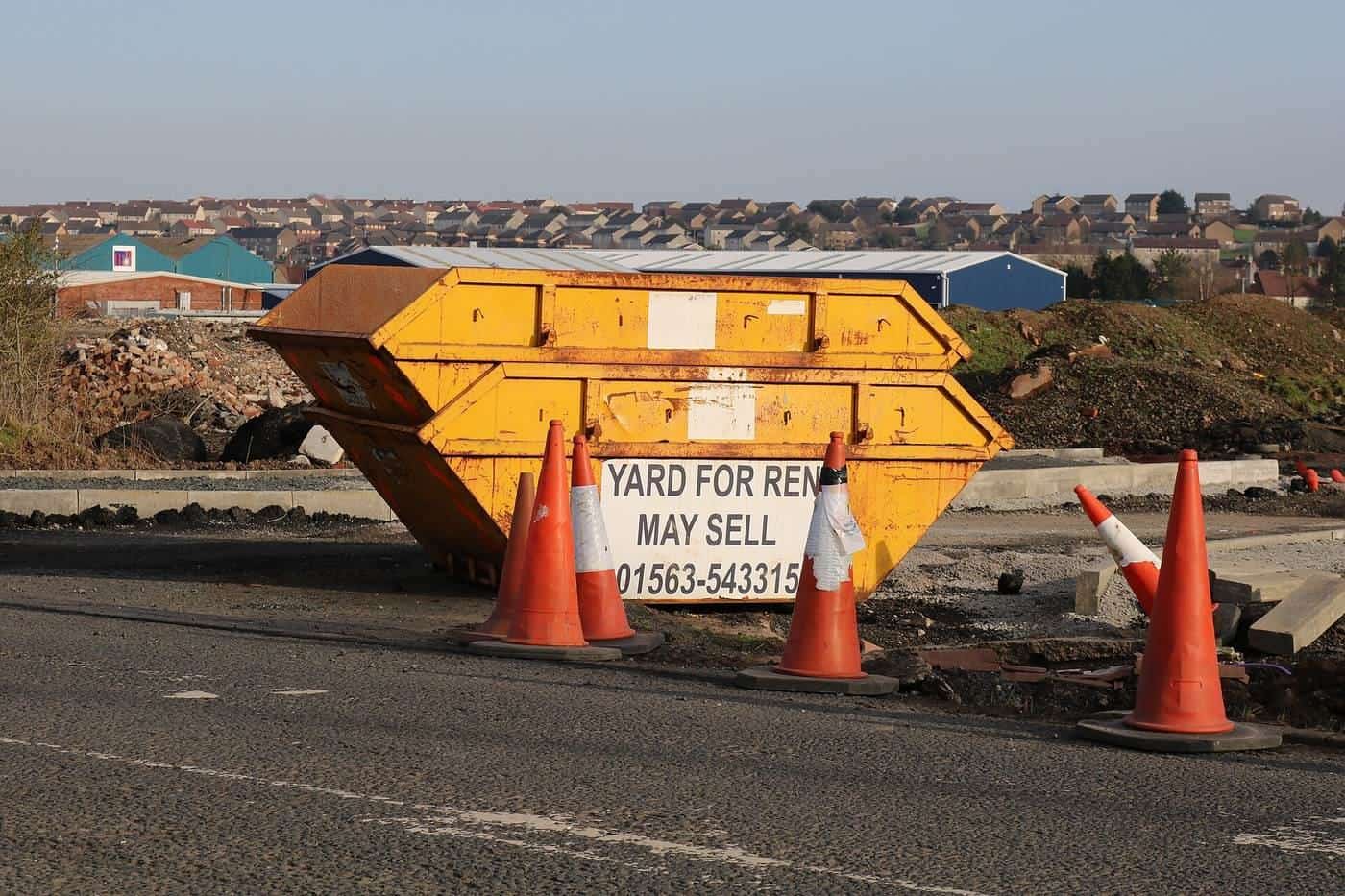
The marrel skip is the most familiar type in Australian suburbs: a steel bin with sloping ends and lifting lugs on each side. The truck lowers two arms, attaches chains to the lugs and lifts the bin on and off. The name comes from this lifting system.
Marrel skips come in a range of sizes from small to large and suit most household and renovation jobs. Their sloping ends make it easier for the truck to place them and easier to tip out the contents, though they slightly reduce the floor area compared with a rectangular bin.
The truck needs room to manoeuvre and space above for the arms, so watch for overhead power lines, branches, carports and eaves when choosing where the skip will go.
Hook-lift and roll-on roll-off bins
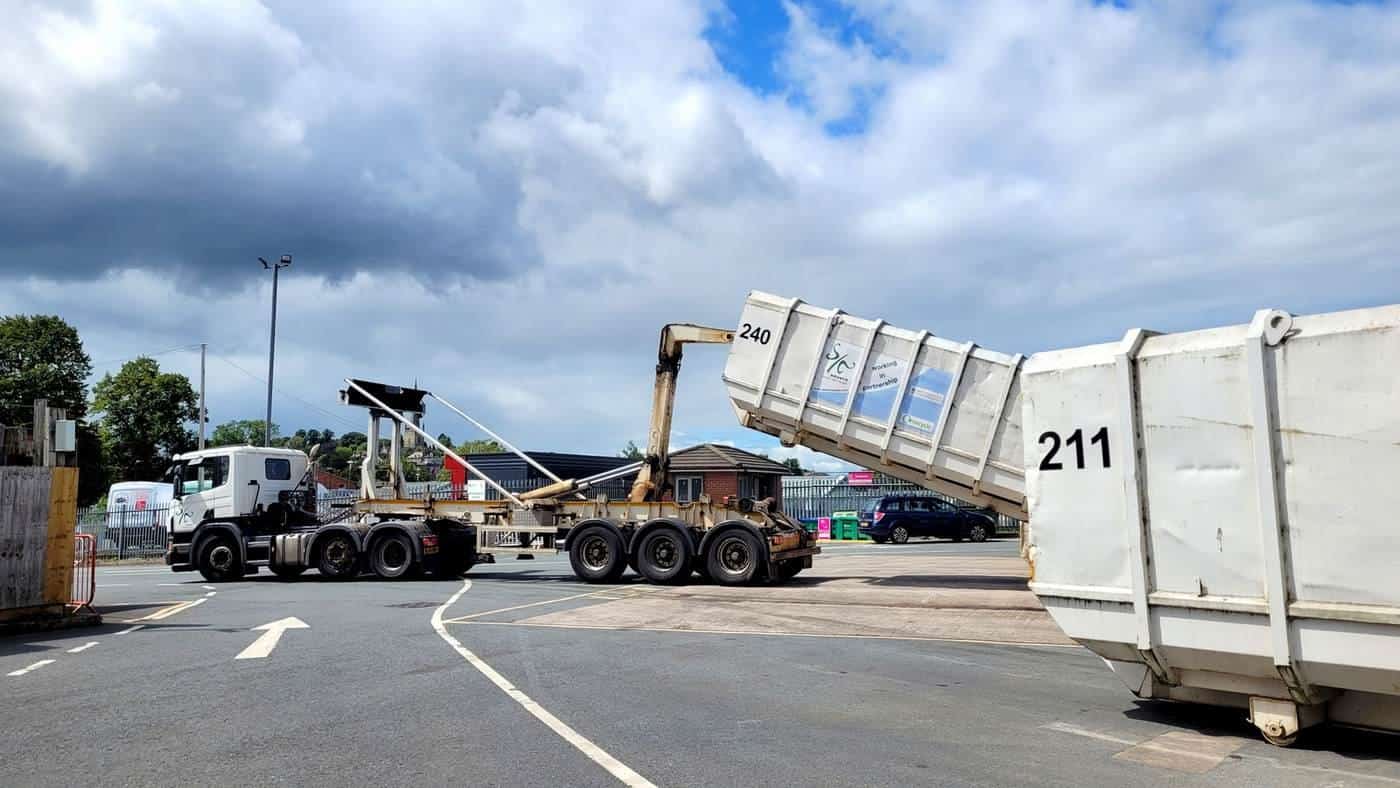
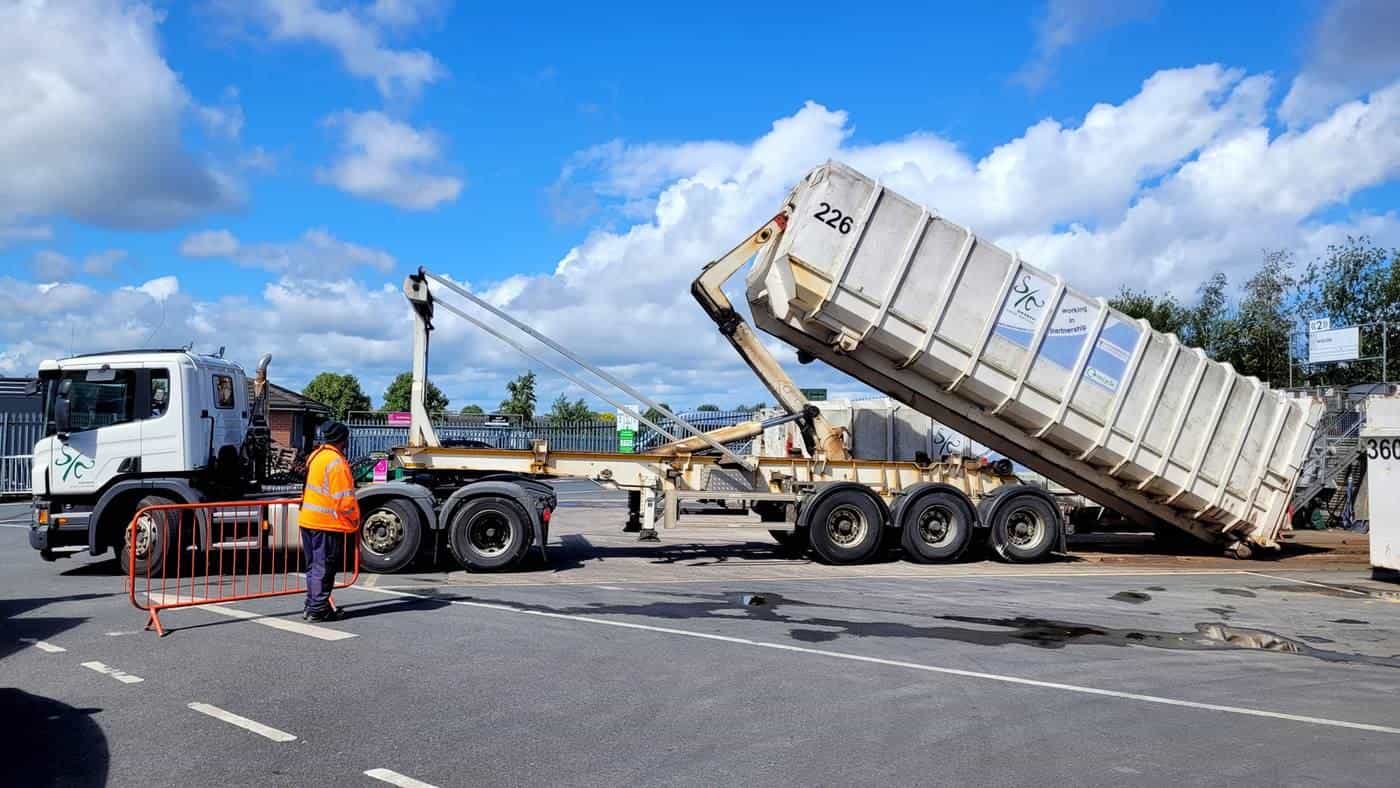
Hook-lift bins, also known as roll-on roll-off bins, are long rectangular containers that the truck pulls up onto its tilting tray using a hydraulic hook, then rolls off at your site. They tend to be larger and are commonly used on building sites, for commercial clean-ups and for big household jobs like whole-house clear-outs.
Because they're long, they need more space, both for the bin itself and for the truck to back in and tilt its tray. Councils restrict the size of bins on public roads, so a large hook-lift bin may need to go on your property or a building site. Inner West Council, for example, sets a maximum skip size of 5 metres by 1.8 metres on the road, and City of Sydney's exemption for minor residential works covers skips up to 3.4 metres by 1.7 metres. See our permits guide.
Walk-in skips
A walk-in skip has a hinged door at one end. You can walk inside, or wheel a barrow up a plank, to load it. That makes it far easier to load heavy or awkward items such as old appliances, sheets of plasterboard or barrow loads of rubble, without lifting them over the side wall.
That's more than a convenience. Safe Work Australia notes that lifting, pushing and pulling heavy or awkward loads can cause injuries. Reducing how much you lift above waist height is one of the easiest ways to avoid a sore back after a clean-up.
Make sure the door is securely latched before the bin is collected.
Heavy-waste skips
Many providers offer skips specifically for heavy materials like soil, sand, clay, bricks, concrete, tiles and rock. They're usually smaller and built to take the weight, and providers often set a maximum fill line well below the top. Some only accept one type of heavy material in a bin, because clean, separated materials can be recycled more easily. See soil, concrete and heavy waste.
Green-waste skips
Some providers offer skips just for garden waste: prunings, branches, leaves, grass and small stumps. Keeping green waste separate means it can be mulched or composted rather than landfilled, and some providers may price it differently from mixed waste. Don't mix soil, rubbish or treated timber into a green-waste skip unless the provider allows it.
Skip bags
A skip bag is a heavy-duty woven bag that you fill and that's collected by a truck with a crane. It's a lightweight alternative to a steel bin for smaller jobs. Our skip bags vs skip bins guide compares them.
Choosing the right type
| Situation | Type to ask about |
|---|---|
| Small job, tight space | Mini skip |
| Typical household or renovation job | Marrel skip |
| Big clean-out or building job with space on site | Hook-lift bin |
| Heavy or bulky items you'd rather not lift | Walk-in skip |
| Soil, bricks, concrete or tiles | Heavy-waste skip |
| Only garden waste | Green-waste skip |
| Very small job, no truck access for a bin | Skip bag |
Access for the truck
Whatever type you choose, the truck has to reach the spot. Before booking, check:
- the width of your driveway or access path, and any gates;
- overhead clearance for power lines, phone lines, branches, carports and eaves;
- the slope and surface of the ground;
- whether the driveway is likely to be damaged by the weight; many people lay planks under a skip to protect pavers and concrete;
- whether cars will be parked in the way on delivery and collection days.
Your provider can advise on what their trucks need. See placing a skip safely.
Lids, covers and security
Some skips come with lids, or providers can supply a tarp or net. A cover helps in several ways: it keeps rain out of absorbent waste, stops light material blowing onto the street, discourages other people from dumping rubbish in your skip, and keeps children and animals out. Lockable lids are especially useful for skips on the road. Ask your provider what's available, and make sure any cover is secured and doesn't stick out over the road or footpath.
Matching the skip to the hire period
If your project will take weeks, consider whether one large skip for the whole period or several smaller skips swapped as they fill suits you better. Swap services can help keep the site tidy and avoid a skip sitting half-full for weeks.
Ask what's available locally
Not every provider offers every type, and names differ between regions. Describe your job, space and waste, and ask which of their bins they'd recommend.
Key points
- Mini skips suit small jobs and tight spaces, and are good for heavy waste.
- Marrel skips are the classic tapered bin for most household jobs.
- Hook-lift bins are large and need plenty of space for the truck.
- Walk-in skips save lifting heavy items over the side.
- Ask for heavy-waste or green-waste skips when that's all you're throwing out.
Frequently asked questions
What's a marrel skip?
A marrel skip is the classic tapered skip with sloping ends, lifted onto the truck by chains on two arms. The name comes from the lifting system. They're common for household and renovation jobs.
What's a hook-lift or roll-on roll-off bin?
A large rectangular bin that the truck pulls up onto its tray with a hook and rolls off at your site. They tend to be bigger and are often used for building and commercial jobs.
What's a walk-in skip?
A skip with a door at one end, so you can walk or wheel a barrow inside to load it. They make it easier to load heavy or bulky items without lifting over the side.
Which type fits a narrow driveway?
Smaller marrel or mini skips are generally easier to place in tight spaces, but it depends on the truck. Tell your provider the width and any overhead obstacles before booking.
Do I need a special skip for soil or concrete?
Usually yes. Many providers offer smaller, strong skips for heavy waste and limit how high they can be filled. Always say what you're throwing out when you book.
Sources and further reading
Facts on this page were checked against these primary and official sources. Conditions change — confirm before you travel or buy.
- Skip bins — Inner West Council
- Managing Waste in Public Places – Local Approvals Policy (PDF) — City of Sydney
- Lifting, pushing and pulling (manual tasks) — Safe Work Australia